Personal Loans & Debt Consolidation: What to Know Before You Apply
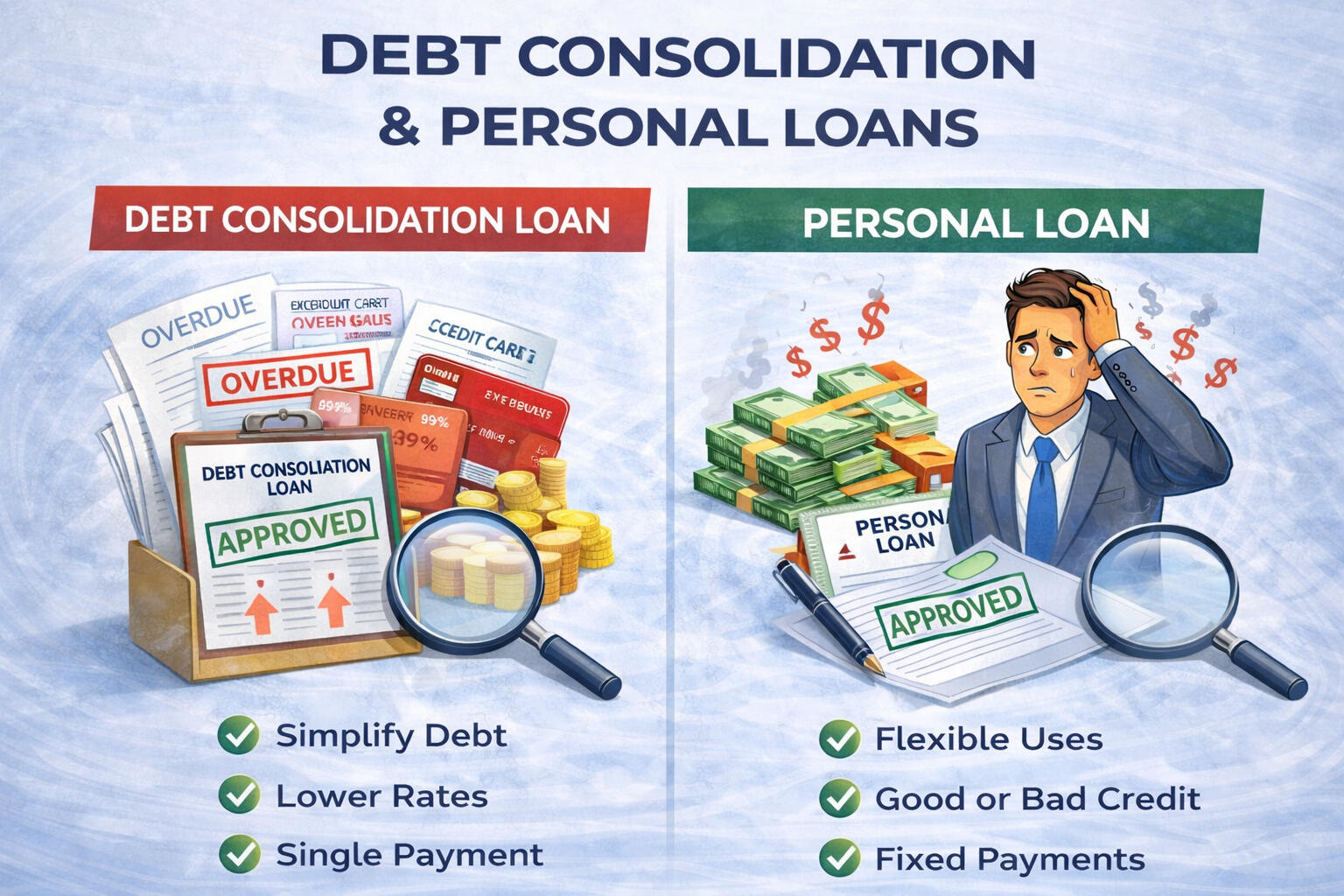
Personal loans and debt consolidation loans can help borrowers address a wide range of financial needs, from consolidating higher-interest debt to covering major expenses. Before exploring third-party options, it helps to understand how these products work, what providers may review, and how to compare options responsibly.
What are Personal Loans and Debt Consolidation Loans
A personal loan is typically a fixed-sum installment loan that allows a borrower to receive funds upfront and repay them over time through scheduled monthly payments. Depending on the provider and the borrower’s profile, personal loans may be used for many purposes, including debt consolidation, emergency expenses, major purchases, home repairs, and other planned costs.A debt consolidation loan is often a type of personal loan used to combine multiple debts into one new loan. In some cases, this may help simplify repayment by replacing several monthly payments with one fixed payment. Whether that makes sense depends on the borrower’s rates, fees, repayment term, and overall budget.
What Providers May Review Before Approval
Providers may review several factors before presenting loan options. These can include credit score and credit history, income and employment consistency, debt-to-income ratio, recent credit activity, current monthly obligations, and the amount being requested.A lower credit score does not always mean a borrower cannot qualify, but it may affect available terms, rates, fees, or loan size. That is why it helps to review your situation carefully before comparing options.Common factors may include:
-Credit score and credit history
-Income consistency
-Current debt obligations
-Recent credit activity
-Requested loan amount
How to Compare Loan Options Responsibly
Responsible comparison starts with understanding your own situation before reviewing any third-party offer. Borrowers should look beyond whether they may qualify and review the full cost of borrowing, including APR, fees, monthly payment, repayment term, and total repayment amount.Before moving forward, it helps to ask whether the payment is realistic, whether the term length makes sense, and whether the loan solves a problem without creating a larger long-term burden.Before comparing options, review:
-Your approximate credit score range
-Your monthly income
-Your current debt obligations
-The purpose of the loan
-Whether your budget can support a new payment.
Comparing Personal Loan and Debt Consolidation Options
Different borrowing options may serve different needs. Reviewing costs, risks, and payment fit can help borrowers compare more responsibly.
| Option | Best For | Review | Tradeoff |
|---|---|---|---|
| Personal Loan | Fixed borrowing for a specific need | APR, fees, payment, term, total cost | Higher costs may apply by credit profile |
| Debt Consolidation Loan | Combining multiple debts into one payment | Total cost, fees, payment fit, debt load | May simplify payments without reducing total cost |
| Lower-Credit Loan Option | Challenged-credit borrowers exploring available options | APR, fees, approved amount, payment fit | Fewer options and higher costs may apply |
| Wait and Improve Readiness | Borrowers not ready for a new payment | Budget, income stability, debt load, credit profile | May delay immediate borrowing while improving readiness |
| Alternative Debt Strategy | Borrowers reviewing non-loan options first | Current obligations, payment strain, budget adjustments | May take longer and may not provide immediate relief |
Frequently Asked Questions
FAQ items
Q) What is the difference between a personal loan and a debt consolidation loan?
A) A debt consolidation loan is often a personal loan used specifically to combine existing debts into one new loan. Personal loans can be used for a broader range of purposes.Q) Can you get a personal loan with fair or bad credit?
A) Some borrowers with fair or challenged credit may still find options, but available terms, fees, and rates may differ based on credit and other financial factors.Q) What should you compare before choosing a loan?
A) Borrowers should review APR, fees, repayment term, monthly payment, and total repayment cost, along with how the loan fits their budget.Q) Is debt consolidation always a good idea?
A) Not always. It depends on the borrower’s debt, terms, fees, repayment strategy, and ability to manage the new loan responsibly.
Ready to Compare Loan Options?
Explore personal loan and debt consolidation options more responsibly based on your profile and borrowing needs.
DisclaimerVETROS Financial Solutions LLC is not a lender, does not make credit decisions, and cannot guarantee loan approval or loan amounts. No application fee is charged. Loans are not available in all states. Short-term loans are not a long-term financial solution. Amounts and terms vary by lender and state.